
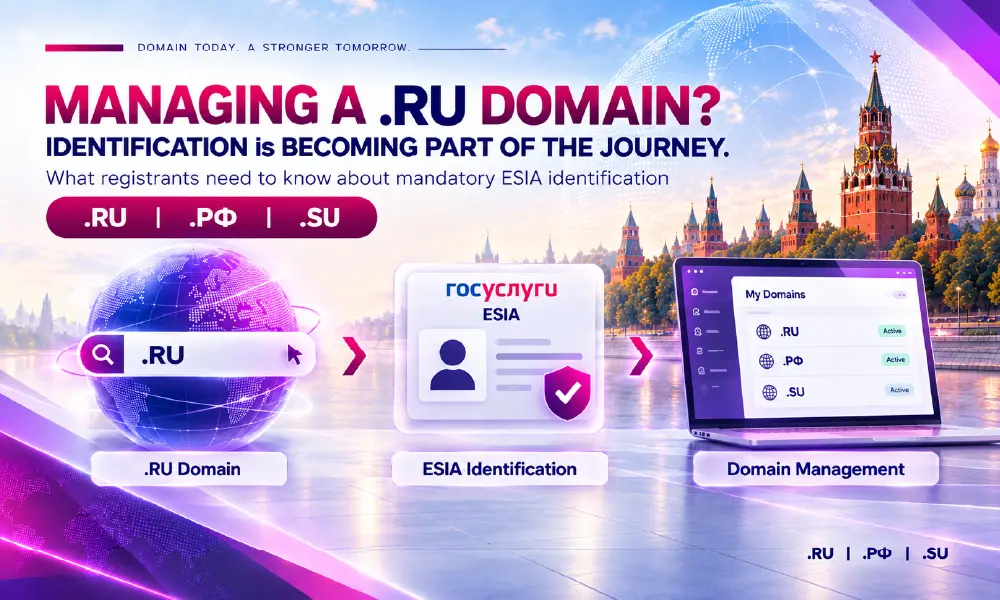
Managing a .RU, .РФ or .SU domain is about to involve more than registering a domain and keeping it renewed.
Beginning 1 September 2026, registrants will be subject to mandatory identity verification through Gosuslugi (ESIA), Russia’s Unified Identification and Authentication System, under Federal Law No. 569-FZ.
The requirements affect individuals, businesses and international domain holders alike.
For organisations that rely on these domains for customer-facing websites, email, brand protection or other online operations, this introduces an important new consideration:
Is your domain ready for the new identification requirements?
While transition timelines remain dependent on registrar approval processes, preparing early can help reduce the risk of disruption to future domain registration, renewal and management.
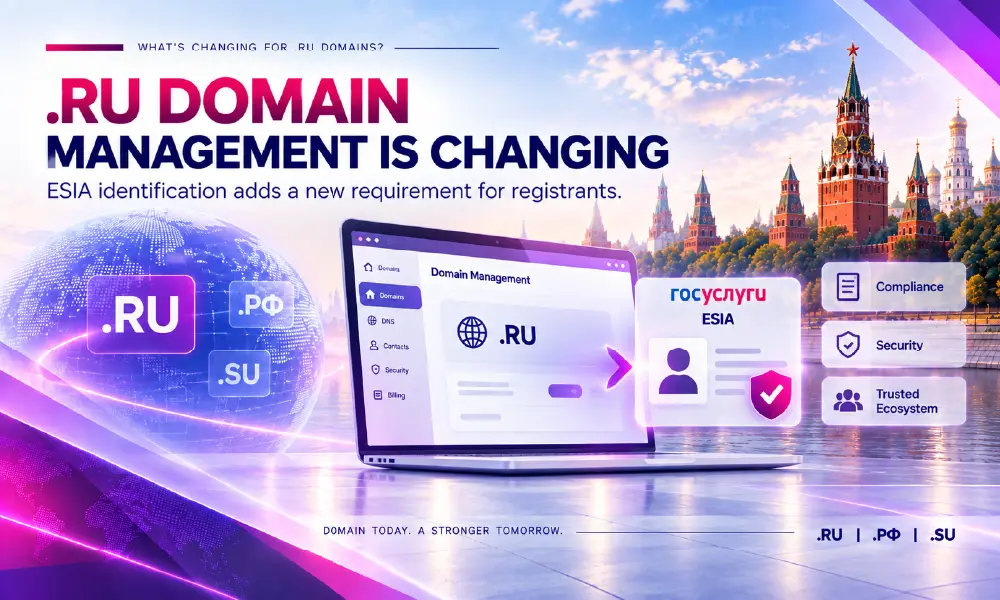
What's Changing for .RU Domains?
The new framework introduces mandatory ESIA identification for registrants of:
.RU | .РФ | .SU
The requirements apply to:
- Individual registrants
- Sole proprietors
- Corporate entities
- Foreign citizens and non-residents
Importantly, the requirements are not limited to new registrations. Existing domains are not exempt. Both new and existing registrants will ultimately need to comply with the new identification framework.
Until registrars are officially included in the government-approved registrar list, domain registration and management may continue under existing procedures.
However, this transition period provides an opportunity for organisations to understand their requirements and prepare rather than waiting until identification becomes necessary.
What Does ESIA Identification Mean for Domain Management?
For businesses, domain management usually follows a relatively straightforward lifecycle:
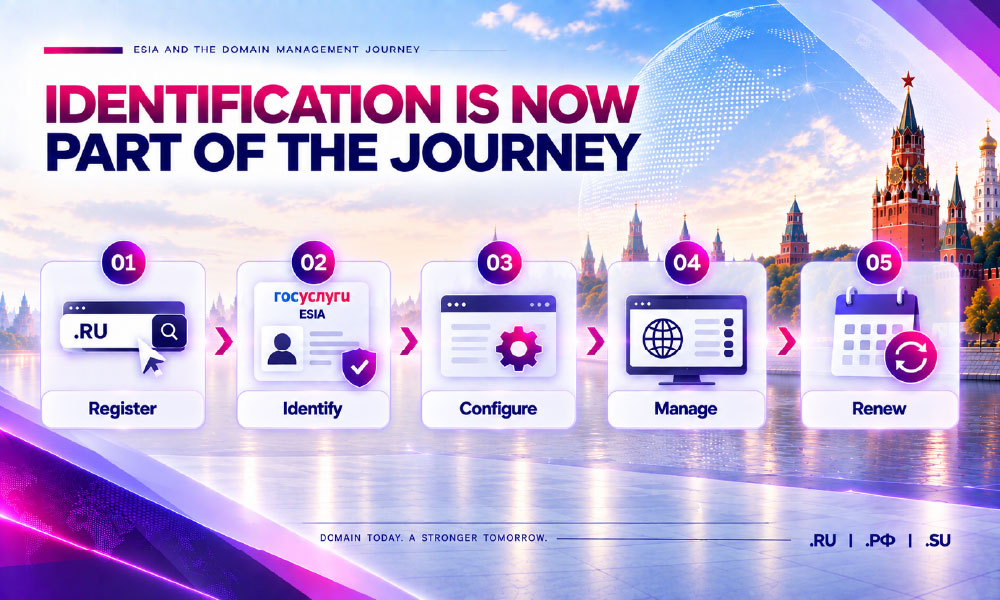
Register → Configure → Manage → Renew
The introduction of mandatory identification adds another consideration to that journey.
Register → Identify → Configure → Manage → Renew
Once the identification framework becomes fully enforceable, registrants who have not completed the required verification may be unable to:
- Register new domains
- Renew existing domains
- Update nameserver settings
This makes identity verification more than an administrative task.
If a business cannot renew an important domain, the issue can eventually affect a digital asset that supports its website, email, customer communications or brand-protection activities.
For organisations managing .RU domains, ESIA readiness should therefore become part of their broader domain-management planning.
The Role of .RU Trustee (Proxy) Services
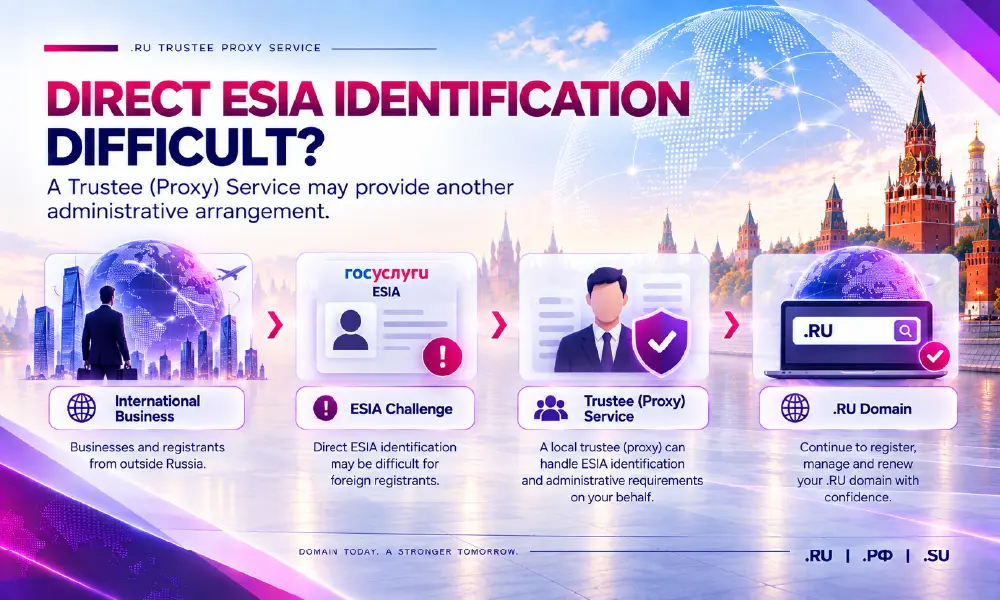
For international businesses and non-residents, obtaining and maintaining a verified ESIA account may present additional administrative challenges.
A company may have a legitimate business need for a .RU domain but still encounter difficulties completing the required identification independently.
This creates an important question:
What if your organisation needs to manage a .RU domain but direct ESIA identification is difficult?
One option to consider is a .RU Trustee (Proxy) Service.
What Is a .RU Trustee (Proxy) Service?
A .RU Trustee (Proxy) Service can help registrants who may encounter difficulties meeting the applicable administrative requirements independently.
A trustee acts as a local administrative representative and assists with meeting regulatory requirements associated with .RU domain administration.
This can provide international businesses with another way to manage their Russian domain requirements without having to navigate every administrative requirement independently.
The trustee arrangement is typically governed by a contractual agreement between the customer and service provider, while the domain continues to support the customer’s online operations.
Who May Consider a Trustee Service?
A Trustee (Proxy) Service may be particularly relevant for:
- Foreign companies without a Russian presence
- International domain portfolio owners
- Organisations managing large numbers of .RU domains
- Businesses that encounter difficulties obtaining or maintaining ESIA verification
The appropriate arrangement will depend on the organisation’s circumstances and the applicable service terms.
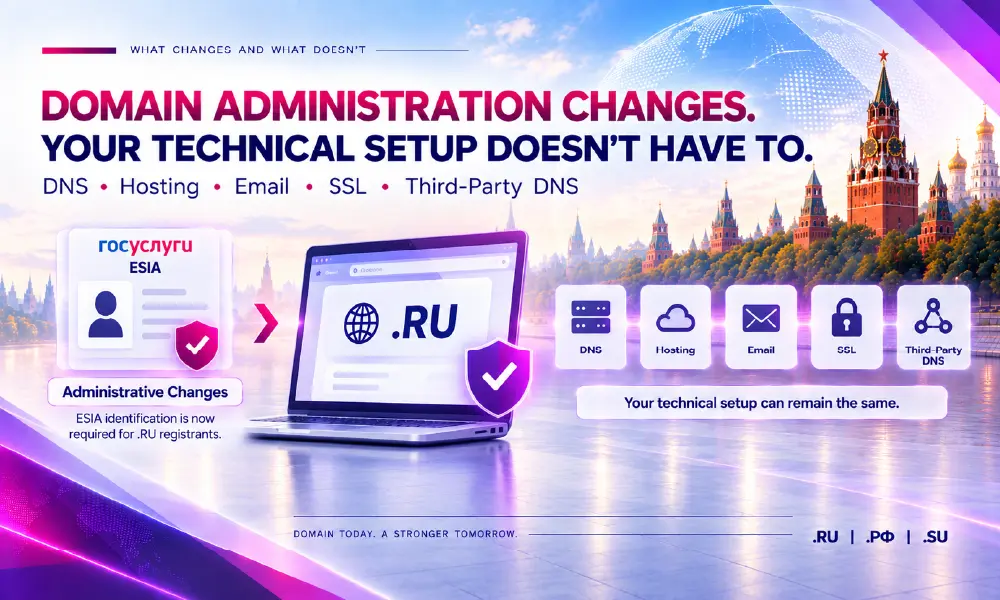
Technical Impact: What Changes and What Doesn’t
The new identification requirements primarily concern domain administration and compliance, rather than requiring organisations to rebuild their technical infrastructure.
Most customers can continue using their existing services, including:
- DNS Hosting
- Website Hosting
- Email Services
- SSL Certificates
- Third-Party DNS Providers
This can include services such as Cloudflare, Azure DNS and AWS Route 53.
In other words, the primary changes relate to:
Registrant Verification
↓
Domain Administration
↓
Eligibility for Domain Lifecycle Activities
rather than the underlying website, email or hosting environment itself.
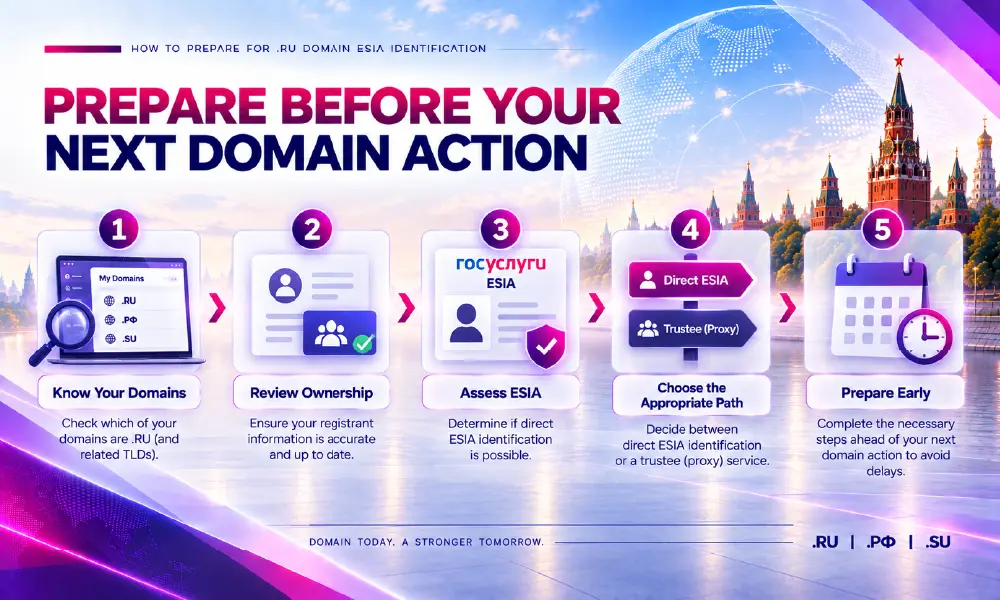
How Should Organisations Prepare?
Preparing does not need to begin with a complicated migration.
Start by understanding what you already have.
- Identify Your Domains
Create an inventory of your:
.RU | .РФ | .SU
Pay particular attention to domains supporting important websites, email services, customer-facing platforms or brand-protection activities.
- Review Ownership Records
Check the current ownership information associated with each domain. Make sure the information is understood and documented internally.
- Confirm Administrative Responsibility
Identify who is currently responsible for managing each domain. This is particularly important for organisations with large domain portfolios or domains managed by different teams.
- Assess ESIA Identification
Determine whether completing direct ESIA identification is feasible for the relevant registrant.
- Consider Whether a Trustee Service Is Needed
If direct identification presents difficulties, assess whether a Trustee (Proxy) Service may provide a more suitable administrative arrangement.
- Prepare the Required Documentation
Avoid waiting until the domain requires an important administrative action. Prepare the relevant identification or corporate documentation in advance.
- Complete Onboarding Early
Where a Trustee Service is required, begin the onboarding process well before applicable enforcement deadlines.
The objective is simple:
Know Your Domains → Review Ownership → Assess ESIA → Choose the Appropriate Path → Prepare Early
Frequently Asked Questions
For individuals:
- Verified Gosuslugi account
- Government-issued identification
- Verified email and phone number
For companies:
- Corporate registration information
- Organizational ESIA account
- Authorized employee linked to the organization
- Appropriate authorization to manage domain assets
Typical requirements may include:
For individuals:
- Passport
- Contact information
- Domain details
For businesses:
- Certificate of incorporation or business registration in English
- Company contact information
- Authorized representative details
Yes. The requirements apply to both existing and newly registered domains.
No. The new requirements are focused on domain administration rather than website or email operations.
Depending on enforcement timelines and registrar implementation, registrants may lose the ability to register, renew, transfer, or modify domains.
Yes. The requirements apply to non-residents as well.
As early as possible. Organizations should use the transition period to review domain portfolios, verify ownership information, and determine whether direct ESIA verification or a Trustee Service is the most appropriate option.
A Trustee Service may be particularly beneficial for:
- Foreign companies without a Russian presence
- International domain portfolio owners
- Organizations managing large numbers of .RU domains
- Businesses that encounter difficulties obtaining or maintaining ESIA verification
Operational control and rights depend on the specific service agreement. Registrants should carefully review provider terms regarding management rights, transfers, renewals, and termination procedures before proceeding.