
In the vast and ever-expanding landscape of the internet, trust is the invisible currency that facilitates all transactions, communications, and data exchanges. For decades, the backbone of this trust has been the digital certificate, best known for enabling Secure Sockets Layer (SSL) and its successor, Transport Layer Security (TLS). These protocols, underpinned by robust cryptographic algorithms like RSA and ECC, have shielded everything from banking logins to secure email, making the concept of “HTTPS” synonymous with security.
However, the ground beneath this digital foundation is shifting. We are standing on the precipice of a new computational era—the Post-Quantum Era—where the emergence of large-scale quantum computers threatens to render today’s gold-standard encryption obsolete.
This imminent threat requires not just an update, but a complete rethinking of how digital certificates are created, managed, and deployed. The evolution of certificates is moving beyond traditional SSL, becoming a complex, multi-layered security mechanism designed to withstand attacks from Quantum adversaries.
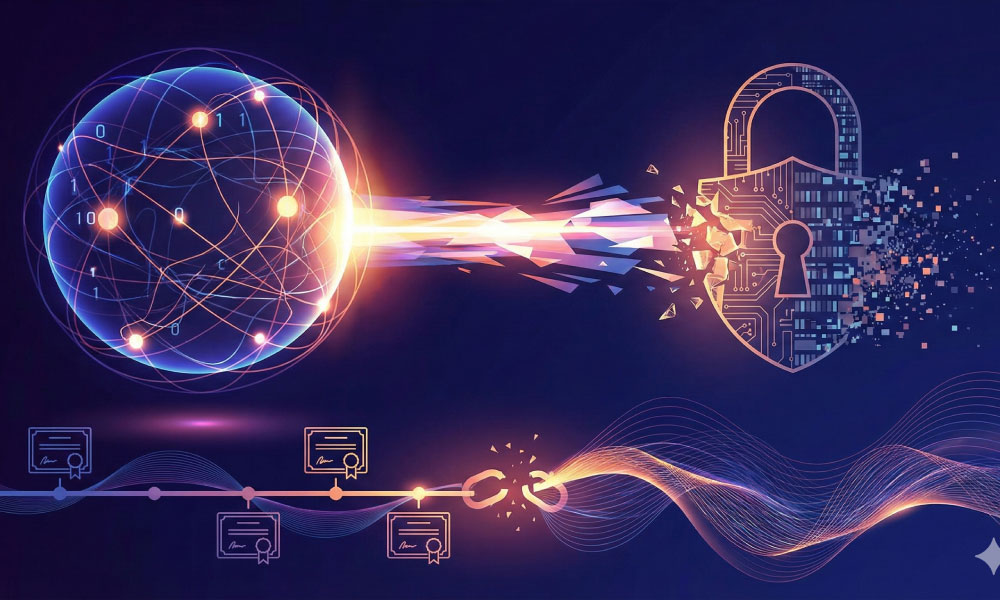
The Quantum Threat: Why Our Current Certificates Will Fail
Current digital certificates rely heavily on public-key cryptography, specifically algorithms built around factoring large numbers (RSA) or solving discrete logarithm problems (ECC). These mathematical challenges are computationally prohibitive for even the most powerful supercomputers today.
Enter the quantum computer.
Algorithms like Shor’s Algorithm, designed to run on a sufficiently large and stable quantum machine, can factor these large numbers and solve the discrete logarithm problem exponentially faster than classical computers. The impact is profound: a quantum computer could potentially break the encryption protecting every currently issued SSL/TLS certificate in a matter of hours, or even minutes. This would completely dismantle online trust, expose sensitive data, and cripple global digital infrastructure.
The crucial challenge isn’t just protecting data today; it’s protecting data that is being encrypted today but will be decrypted years in the future, a concept known as Harvest Now, Decrypt Later (HNDL) attacks.
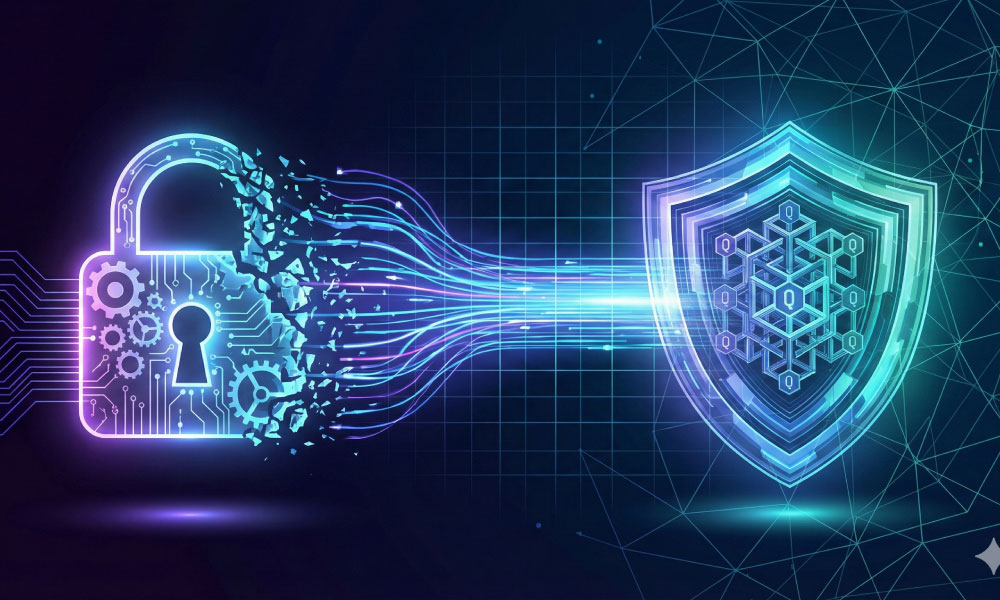
The Evolution: Introducing Post-Quantum Cryptography (PQC)
The solution lies in migrating the underlying mathematical principles of digital certificates to algorithms evaluated to be quantum-resistant. This field is known as Post-Quantum Cryptography (PQC).
Following a global standardization effort, the National Institute of Standards and Technology (NIST) has finalized several PQC standards that rely on mathematical problems computationally infeasible for both classical and quantum computers, such as:
- FIPS 203 (ML-KEM): Finalized standard for general encryption and key exchange.
- FIPS 204 (ML-DSA): Finalized primary standard for digital signatures.
- FIPS 205 (SLH-DSA): Finalized robust “backup” standard for digital signatures.
- FIPS 206 (FN-DSA): Currently in development; optimized for compact digital certificates.
These PQC algorithms are currently being integrated into digital certificate structures to replace legacy RSA and ECC components.
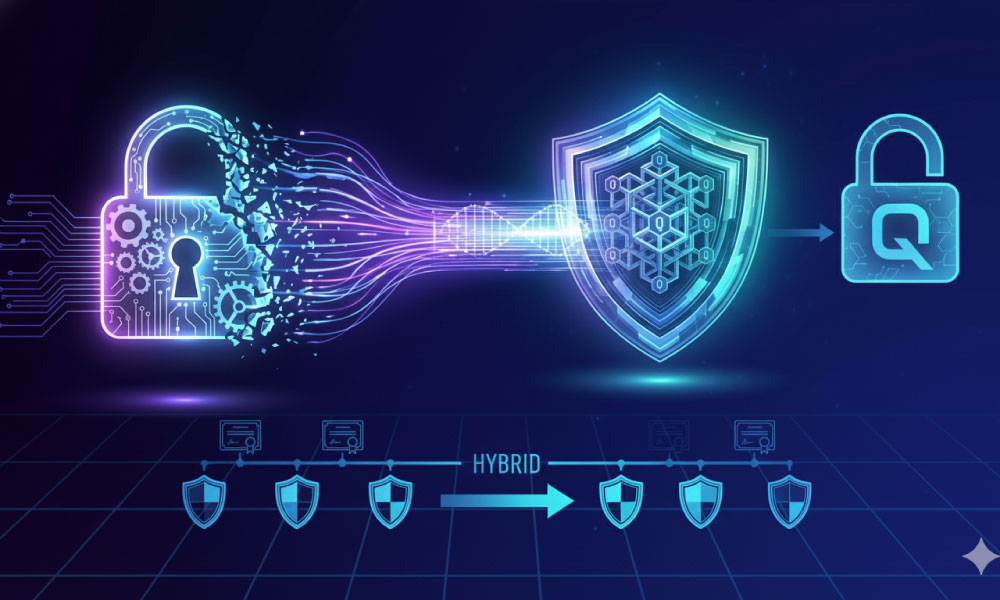
The Hybrid Approach: Easing the Transition
The migration to a fully quantum-safe environment cannot happen overnight. It is a massive undertaking involving millions of servers, devices, and applications. Furthermore, while PQC algorithms are promising, they are still relatively new, and organizations are understandably cautious about relying solely on unproven technology.
This necessity has given rise to the Hybrid Certificate strategy.
A hybrid certificate uses a standard certificate container (like an X.509 certificate) but contains two public keys and signature algorithms:
- The Classical Key (e.g., RSA or ECC): This ensures compatibility with all existing, non-quantum-enabled systems and provides a security fallback if a flaw is found in the PQC algorithm.
- The PQC Key (e.g., CRYSTALS-Kyber): This provides quantum resistance, ensuring that even if a quantum computer arrives, the connection remains secure.
This dual-algorithm approach allows organizations to begin the transition immediately without compromising current stability or breaking interoperability with legacy systems, effectively serving as a secure bridge to the quantum era.
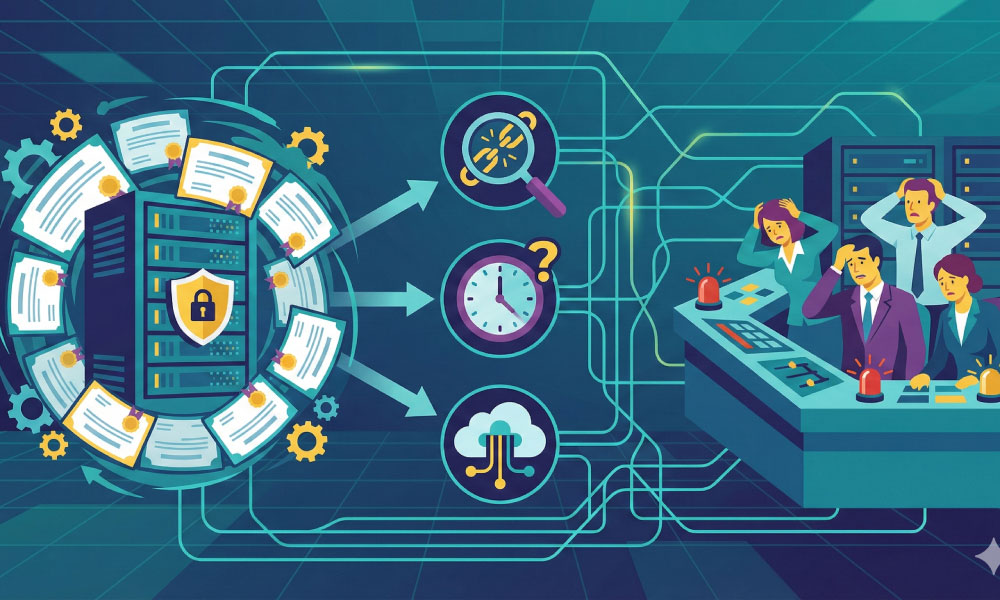
Operational Challenges for Certificate Authorities (CAs)
The evolution of digital certificates poses significant operational challenges for Certificate Authorities (CAs) and IT teams:
- Increased Certificate Size and Latency
PQC algorithms often require larger key sizes and signatures than their classical counterparts. For example, a PQC key might be several kilobytes larger than a standard 256-bit ECC key. This increase in size impacts the TLS handshake, potentially leading to increased latency and slower page loads, particularly in high-volume environments or networks with limited bandwidth.
- Crypto-Agility and Automation
The quantum transition demands complete crypto-agility. Organizations must be capable of discovering, updating, and replacing their cryptographic assets quickly and efficiently. The old method of manually replacing certificates every year or two will be insufficient. Modern certificate management must rely on automation tools that can:
- Identify all active certificates and the algorithms they use.
- Instantly detect vulnerable algorithms.
- Issue and deploy hybrid or PQC certificates automatically without human intervention.
- Standardizing PQC Profiles
The transition requires global consensus. The Internet Engineering Task Force (IETF) and standardization bodies are working to define new TLS protocol versions (like TLS 1.3 or 1.4 extensions) that explicitly support PQC key exchange methods. CAs must update their issuance pipelines to comply with these new PQC certificate profiles to ensure global trust and interoperability.
Beyond Security: The Role of Certificates in Identity and IoT
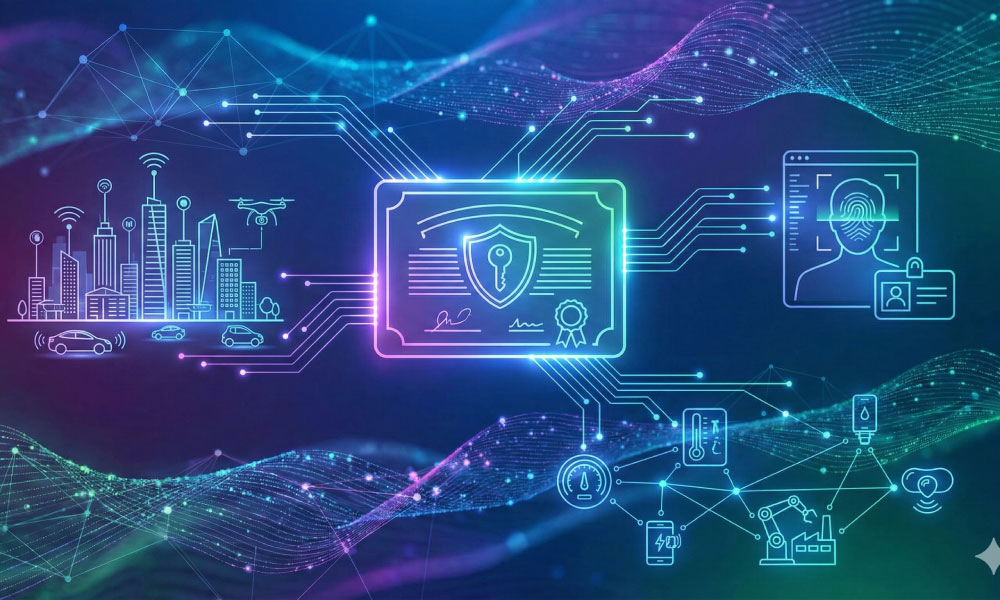
The evolution of digital certificates extends beyond just securing web traffic. They are becoming fundamental identity anchors in a number of growing sectors:
- IoT (Internet of Things): Every smart device from sensors to industrial machinery needs a unique, unforgeable identity. Certificates provide this identity, ensuring that only authorized devices can communicate. Future PQC-enabled certificates will be vital here to prevent large-scale data harvesting from unsecured IoT endpoints.
- Zero Trust Architecture: In a Zero Trust model, where no user or device is inherently trusted, certificates are used for mutual TLS (mTLS) to verify the identity of both the client and the server for every connection. PQC migration is essential to maintain the foundational integrity of this security model.
- Software Supply Chain Security: Certificates are used to digitally sign software and firmware updates. If these signing certificates are broken by a quantum computer, malicious actors could easily inject compromised code into the global software supply chain.

Preparing for the Future of Trust
The migration to Post-Quantum Cryptography is arguably the most significant cryptographic transition in internet history. It is a necessary evolution of digital certificates that goes “Beyond SSL” to protect the digital trust framework from the most powerful computational threat yet conceived.
This transition is not solely the responsibility of cryptographers or standards bodies; it is an imperative for every organization that relies on secure online communication. Companies must begin the journey toward crypto-agility today by assessing their certificate inventory, investing in automated management tools, and planning the integration of hybrid certificates.
The goal is clear: to ensure that the fundamental digital handshake, the trust established by the digital certificate remains unbreakable, irrespective of how powerful computers become. The future of digital trust depends on the proactive steps we take now to evolve our certificates for the quantum era.