
Malaysia's PQC Readiness Roadmap: What Businesses Need to Know
Malaysia has introduced its Post-Quantum Cryptography (PQC) Readiness Roadmap to help organisations prepare for the future impact of quantum computing on today’s encryption.
Although large-scale quantum attacks are not an immediate threat, preparing early is essential because migrating cryptographic systems can take years. Businesses should begin improving their crypto-agility, automating certificate management, and planning for future cryptographic changes rather than waiting until new standards become mandatory.
What Is Malaysia’s Post-Quantum Cryptography (PQC) Readiness Roadmap?
Malaysia’s Post-Quantum Cryptography (PQC) Readiness Roadmap is a national initiative developed to help public and private organisations prepare for cryptographic threats posed by future quantum computers.
The roadmap provides guidance on:
- Understanding quantum-related cybersecurity risks
- Planning the migration to quantum-resistant cryptographic algorithms
- Building crypto-agility across IT environments
- Encouraging early assessment of cryptographic assets
Its objective is to reduce long-term cybersecurity risks while ensuring Malaysia’s digital infrastructure remains resilient as cryptographic standards evolve.
Why Should Businesses Care About Quantum Computing Today?
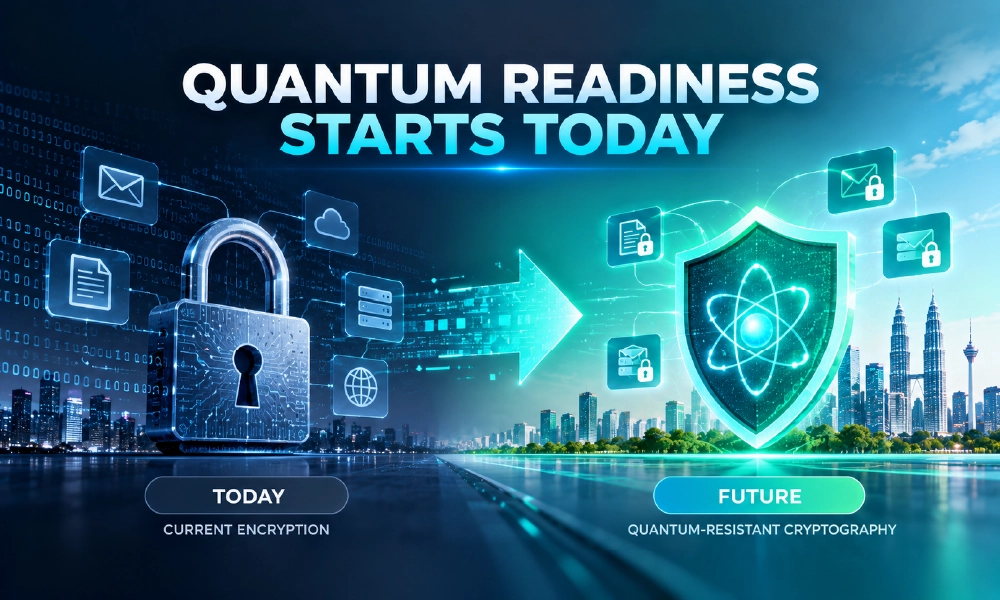
Many organisations believe quantum computing is still years away, so they postpone planning.
However, preparing for PQC is not about responding to an immediate threat. It is about recognising that cryptographic migrations across enterprise environments require significant planning, testing, and implementation.
Organisations that delay preparation may face greater operational complexity when new cryptographic standards become widely adopted.
What Does PQC Have to Do with SSL Certificates?
This is where many organisations overlook an important connection.
While businesses are beginning to hear about post-quantum cryptography, many are still focused on managing SSL/TLS certificates and maintaining compliance.
These priorities are more closely related than they appear.
The maximum validity period for public SSL/TLS certificates is expected to reduce to approximately:
|
Year
|
Maximum Certificate Validity
|
|---|---|
|
Today
|
Up to 398 days
|
|
2026
|
Approximately 200 days
|
|
2027
|
Approximately 100 days
|
|
2029
|
Approximately 47 days
|
Table 1: Maximum validity period for public SSL/TLS certificates
As certificate validity continues to shorten, organisations will need to renew certificates more frequently. Manual certificate management will become increasingly difficult, particularly for enterprises managing hundreds or thousands of certificates.
At the same time, organisations must also prepare for future cryptographic transitions as PQC standards mature.
Why Crypto-Agility Is Essential for PQC Readiness
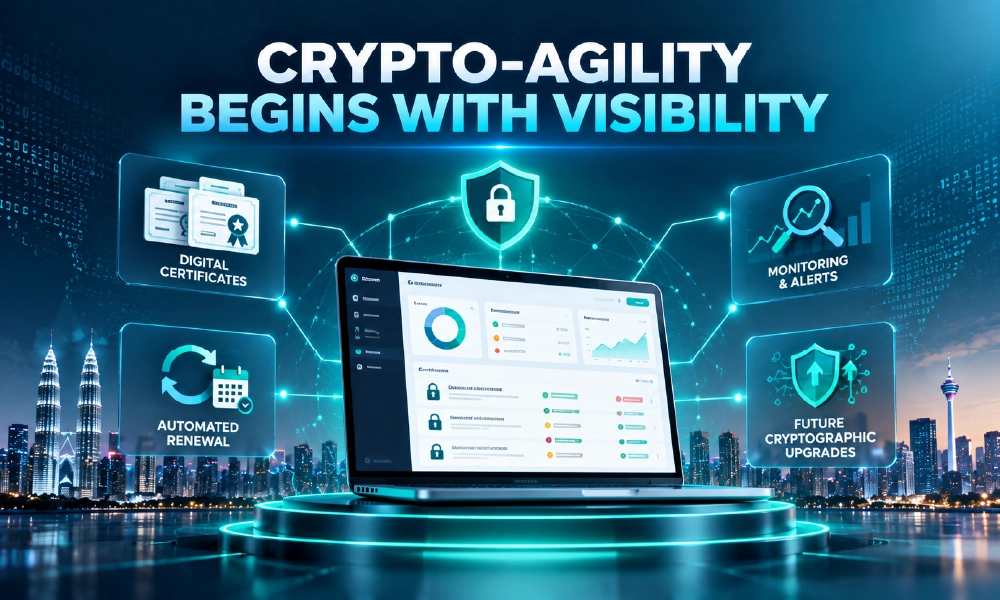
Crypto-agility is the ability to quickly identify, replace, and update cryptographic technologies without causing operational disruption.
For businesses, crypto-agility means being able to:
- Discover where certificates are deployed
- Replace certificates efficiently
- Support future cryptographic algorithms
- Reduce downtime during security upgrades
- Respond quickly to evolving compliance requirements
Without crypto-agility, migrating to post-quantum cryptography can become significantly more complex and resource-intensive.
How Certificate Lifecycle Management (CLM) Supports PQC Readiness
Certificate Lifecycle Management (CLM) helps organisations automate the management of digital certificates throughout their lifecycle.
While CLM does not make an organisation quantum-safe on its own, it establishes the operational foundation needed to support future cryptographic transitions.
Key benefits include:
- Automated certificate discovery
- Centralised certificate inventory
- Automated issuance and renewal
- Expiry monitoring and alerts
- Reduced operational risk
- Improved visibility across hybrid environments
By automating certificate operations today, organisations are better positioned to adopt new cryptographic standards tomorrow.
Practical Steps to Prepare for Malaysia's PQC Roadmap
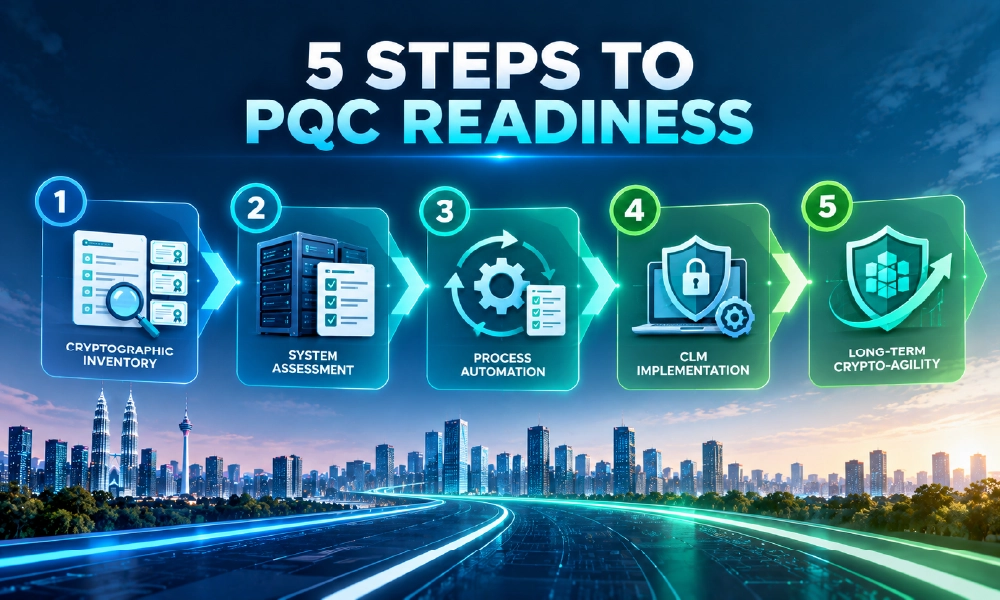
Businesses do not need to replace every cryptographic system immediately. Instead, they should begin building the capabilities required for future migration.
Recommended actions include:
- Create an inventory of cryptographic assets and digital certificates.
- Assess systems that rely on current public-key cryptography.
- Reduce manual certificate management processes.
- Implement Certificate Lifecycle Management (CLM).
- Develop a long-term crypto-agility strategy aligned with evolving industry standards.
Taking these steps now can reduce operational risk and make future cryptographic migrations more manageable.
Conclusion
Malaysia’s Post-Quantum Cryptography Readiness Roadmap is more than a cybersecurity initiative, it is a reminder that organisations should begin preparing for long-term cryptographic change today.
As SSL/TLS certificate lifecycles continue to shorten and new cryptographic standards emerge, businesses that invest in automation and crypto-agility will be better positioned to adapt with confidence.
At WebNIC, we help organisations strengthen digital trust by simplifying certificate management and supporting long-term security readiness. Implementing Certificate Lifecycle Management (CLM) today can help build the operational foundation needed for tomorrow’s cryptographic challenges.
Frequently Asked Questions
No. Practical quantum computers capable of breaking widely used public-key cryptography are not yet available. However, organisations should prepare early because migrating cryptographic infrastructure can take several years.
No.
Certificate Lifecycle Management helps automate certificate operations, while Post-Quantum Cryptography introduces new cryptographic algorithms designed to resist quantum attacks.
CLM complements PQC by making future cryptographic transitions easier to manage.
Preparing early allows organisations to improve certificate visibility, automate renewals, and build crypto-agility before shorter certificate lifecycles and future cryptographic changes increase operational complexity.