
Your brand protection platform has just detected dozens of phishing websites, fake social media accounts, and counterfeit mobile apps impersonating your business.
For many organizations, identifying threats is only the beginning. The real challenge lies in determining which threats are genuine, prioritizing them, and removing them before customers become victims.
An alert alone doesn’t protect your brand. What matters is what happens next.

Detection Is Only the First Step
Modern cybercriminals move quickly. They register lookalike domains, launch phishing websites, create fake social media profiles, and publish counterfeit products across multiple platforms.
Today’s Digital Brand Protection solutions continuously monitor for threats such as:
- Phishing websites
- Lookalike domains
- Fake social media accounts
- Counterfeit marketplace listings
- Fraudulent mobile applications
- Trademark infringement
- Malicious online advertisements
This provides organizations with valuable visibility into how their brands are being abused across the digital landscape.
However, visibility alone does not stop an attack.
Every Alert Needs Validation
Not every alert represents an immediate threat.
Some websites may already be offline. Others may simply reference your brand without malicious intent.
Before taking action, organizations need to answer important questions:
- Is the threat active?
- Is it targeting customers?
- How severe is the risk?
- Should it be prioritized?
Modern Digital Brand Protection platforms combine AI, threat intelligence, and expert analysis to validate incidents, reduce false positives, and prioritize threats based on business impact.
This allows security teams to focus on genuine risks rather than spending valuable time investigating harmless alerts.
Speed Matters
Once a phishing website or impersonation account is confirmed, every minute counts.
The longer malicious content remains online, the greater the risk of:
- Customers losing money
- Credentials being stolen
- Brand reputation being damaged
- Negative customer experiences
- Increased support and recovery costs
Fast response significantly reduces customer harm.

Detection Without Takedown Leaves Customers Exposed
Many organizations have excellent monitoring capabilities but still rely on manual processes to remove malicious content.
A typical workflow often looks like this:
- Security identifies the threat.
- IT validates the incident.
- Legal prepares a takedown request.
- Marketing or Brand teams assess customer impact.
- The hosting provider or platform processes the removal.
Each handoff introduces delays, allowing cybercriminals more time to exploit your customers.
Digital Brand Protection Is a Complete Lifecycle
An effective brand protection strategy extends far beyond threat detection.
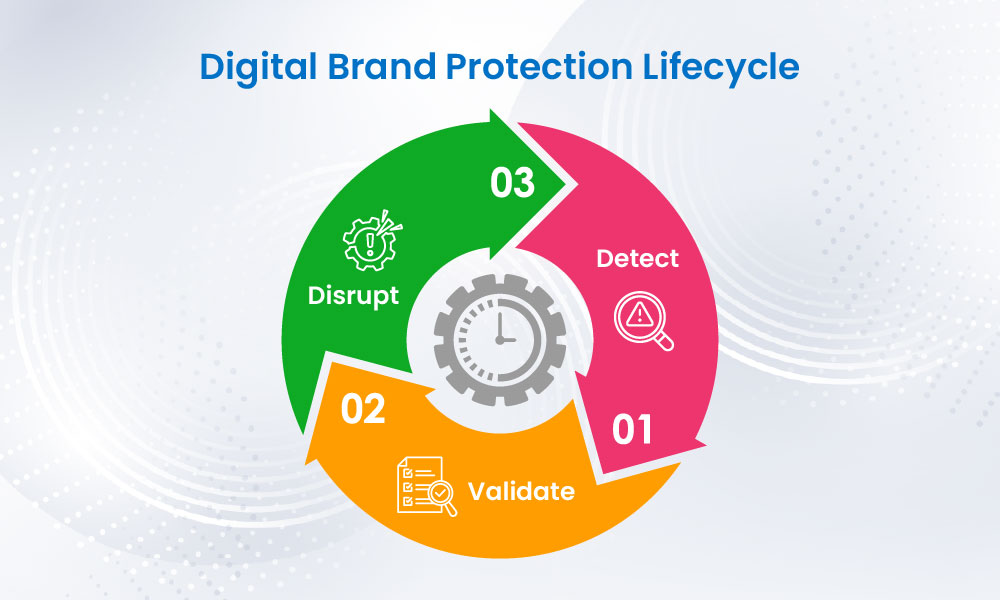
It follows three continuous stages:
- Detect – Continuously monitor domains, websites, social media, marketplaces, mobile apps, and other digital channels for brand abuse.
- Validate – Confirm legitimate threats, eliminate false positives, and prioritize incidents based on risk and business impact.
- Disrupt – Remove phishing websites, fake social media accounts, counterfeit listings, malicious advertisements, and impersonating domains before they can cause widespread damage.
Continuous monitoring also ensures that if attackers attempt to recreate the same infrastructure, the response process begins again automatically.
From Visibility to Action
The most effective Digital Brand Protection solutions don’t simply generate alerts.
They help organizations:
- Detect threats earlier
- Reduce manual investigations
- Accelerate takedowns
- Minimize customer exposure
- Protect brand reputation
- Improve operational efficiency
Instead of overwhelming security teams with dashboards and notifications, they transform threat intelligence into measurable action.

Some Customer Groups Face Greater Risks
Brand impersonation can have particularly devastating consequences for older adults.
FTC data shows that consumers aged 60 and above lost US$2.4 billion to fraud in 2024, a fourfold increase compared to 2020. Many of the largest financial losses resulted from impersonation scams involving banks, government agencies, healthcare providers, and investment platforms.
For organizations serving these audiences, protecting their brand is not simply about preventing fraud it is about protecting vulnerable customers from life-changing financial losses.
The Cost Continues Long After the Attack
Unlike a data breach, which usually occurs as a single event, brand impersonation creates ongoing damage.
Every fake website, phishing email, or impersonation account increases customer uncertainty. Even after malicious content is removed, many customers remain cautious about interacting with the legitimate brand.
Over time, this affects:
- Customer lifetime value
- Brand loyalty
- Conversion rates
- Referral rates
- Overall business growth
Trust, once damaged, takes far longer to rebuild than infrastructure.
Hidden Operational Costs
Responding to impersonation campaigns also consumes significant internal resources.
Organizations often need to coordinate multiple departments, including:
- Customer support
- Marketing
- Legal
- Communications
- Cybersecurity
- IT operations
Teams spend valuable time investigating incidents, responding to customer enquiries, coordinating takedowns, monitoring social media, and managing public communications.
These operational costs rarely appear in financial reports but represent a significant burden on the business.

Digital Brand Protection Is a Business Strategy
Brand impersonation is no longer solely a cybersecurity concern it is a business risk that affects every stage of the customer journey.
An effective digital brand protection strategy should include:
- Continuous monitoring for phishing websites and typosquatting domains
- Detection of fake social media accounts and fraudulent advertisements
- Rapid takedown of malicious content
- Monitoring of brand misuse across digital channels
- Customer awareness and verification initiatives
By identifying and disrupting impersonation campaigns early, organizations can reduce fraud, preserve customer confidence, and protect the reputation they have spent years building.
Cybercriminals continue to exploit trusted brands because trust remains one of the most valuable assets online. Every successful impersonation campaign weakens that trust not only for the victims but also for future customers.
Organizations that invest in digital brand protection are not simply preventing fraud. They are safeguarding customer relationships, strengthening marketing performance, protecting their reputation, and ensuring long-term business resilience in an increasingly hostile digital environment.